If you’ve ever worked in biopharmaceutical manufacturing, you know that host cell residual DNA (HCD) isn’t just a tiny afterthought—it’s a critical quality attribute that can derail a drug’s path to approval, slow down batch release, or even impact patient safety. As a supplier of HCD detection kits, I get asked this question at least once a week by new lab managers, process development scientists, and even regulatory affairs specialists: Are your kits easy to use? The answer, as with most things in life, isn’t a straight “yes” or “no”—it depends on the kit’s design, the user’s lab experience, and whether the kit is built to solve real lab pain points instead of checking a box on a product spec. Let me break this down, not just from a supplier’s perspective, but from the dozens of lab teams I’ve partnered with over the last six years. Host Cell Residual DNA Detection Kits
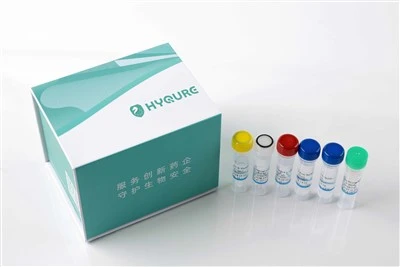
First, let’s ground this in why ease of use matters so much for HCD testing. Unlike some assay types where a slow, methodical workflow is acceptable, HCD testing is often a bottleneck in downstream processing. For contract development and manufacturing organizations (CDMOs) running 20+ cell culture batches a week, or for mid-sized biotechs running early-phase clinical trials, a kit that takes three hours vs. eight can mean the difference between meeting a regulatory deadline and delaying a patient’s access to a new therapy. I’ve seen a small biotech delay their Phase 1 trial start by two weeks because their old HCD kit required 12+ hours of overnight incubation, and their lab team couldn’t rearrange their schedule to run it after hours. That’s not a minor inconvenience—that’s a setback that impacts real people.
When I hear a scientist say a kit is “hard to use,” it’s rarely because the assay chemistry is flawed. More often, it’s because of unnecessary complexities baked into the kit’s design. Early on in my career as a kit developer, I worked on a kit that required separate master mixes for each cell line—you had to order a custom mix for CHO, another for HEK293, a third for E. coli, and so on. For a lab that works with three different host cells, that meant stocking five different mixes, calibrating pipettes differently for each, and keeping track of expiration dates for each unique product. It was a nightmare for inventory, and we got dozens of complaints from labs that mixed up the master mixes and got invalid results. That’s the kind of avoidable friction that makes HCD kits feel hard to use. When we redesigned that kit to work for all common host cell lines with a single, pre-aliquoted master mix, the feedback flipped immediately—labs reported cutting their assay prep time by 40%, and cross-contamination errors dropped by 70%. Ease of use isn’t about simplifying the science; it’s about removing steps that have nothing to do with accurate detection.
Another big pain point I see is handling non-specific binding and background noise, which is where a well-optimized kit really shines. HCD assays, especially the widely used hybridization-based or qPCR-based kits, rely on probes that bind to host DNA. If those probes also bind to small fragments of sample matrix (like leftover cell culture media proteins, or process buffers), you get high background noise that makes results unreliable. A few years ago, a client from a mid-sized biotech reached out to us frustrated: their old kit required two separate wash steps to cut down background, and even then, their sample results were consistently 2x higher than the theoretical HCD load in their batch. When we sent them a trial of our new kit, which included a single optimized blocking step built into the probe mix, not separate wash steps, their data quality improved on the first run. Their lab manager told me, “I didn’t have to adjust my protocol, I didn’t have to re-run three samples to get a valid result—this worked on the first try.” That’s the kind of ease of use that translates directly to time saved and reliable data.
Of course, there’s a balance here: we never want to sacrifice sensitivity to make a kit easier to use. For clinical-grade samples, the regulatory limit for HCD is often as low as 10 pg per dose—you need a kit that can pick up those tiny amounts, even when the sample is diluted with process impurities. I’ve talked to labs that tried a “simple” HCD kit that skipped an optional lysis step, only to miss low-level HCD in their early-process batches, leading to a failed regulatory inspection. Ease of use doesn’t mean eliminating all validation steps; it means packaging those steps in a way that’s intuitive, not confusing. For example, our kits include a one-page visual protocol that breaks each step into a numbered box with a photo, instead of a dense 10-page PDF that mixes assay theory with workflow. New users—like a lab tech who’s only been on the job three months—can follow that visual guide without needing to call a senior scientist every time. We also include a pre-made control panel with three standard concentrations of HCD, so users don’t have to make their own standards from scratch, which eliminates errors in standard curve preparation.
But here’s the honest truth: a kit is only as easy to use as the support that comes with it. I’ve seen many kit suppliers ship a box and disappear—leaving labs to troubleshoot on their own when a run fails. That’s a big mistake. Last year, a CDMO we work with had a question about their first run with a new mammalian HCD kit at 4:45 PM on a Friday, with a regulatory submission deadline looming at the end of the month. Our technical support team didn’t just send a generic FAQ email—they hopped on a 10-minute video call, walked through their plate setup, and noticed they’d accidentally used the wrong dilution buffer for the control sample. They fixed it in time, submitted their data on Monday, and got their batch approved without delay. No amount of “simple” assay design can make up for inaccessible support. Ease of use is a partnership between the kit and the supplier, not just a feature of the product itself.
Now, let’s address the elephant in the room: what about users who’ve never run an HCD assay before? Early-phase biotechs often hire scientists who specialize in molecular biology but not in bioprocess testing, and that’s where a well-designed kit can be a game-changer. I remember a user from a small startup that was developing a gene therapy—they had zero prior experience with HCD testing, and their first attempt with a competitor’s kit took two days of troubleshooting, with three failed runs, just to get a valid control curve. When they switched to our kit, they ran their first complete assay in four hours, with all controls within acceptable ranges. They told me, “I thought this would be another one of those lab tasks that takes weeks to get right, but this kit walked me through every step.” That’s the kind of ease of use that empowers small teams to move fast without needing to build an entire specialized testing team from scratch.
That said, no kit is zero-effort. There are still basic lab skills required—like accurate pipetting, proper sample storage, and following the protocol’s incubation times. I get frustrated when I see reviews that say a kit is “hard to use” because a user pipetted 10% too much sample and got a high background. That’s not a kit flaw—it’s a training gap, which is why we include a 15-minute on-demand training video with every kit shipment, covering common pipetting errors, sample preparation tips, and how to interpret the results correctly. We also host free monthly webinars for anyone who needs a refresher, whether they’re a new lab tech or a seasoned scientist looking to streamline their workflow.
Over the last six years, we’ve shipped thousands of HCD detection kits to labs across North America, Europe, and Asia, and we’ve refined our design based on real user feedback, not just industry trends. The biggest takeaway from that feedback is that ease of use isn’t about making the assay do all the work—it’s about removing the unnecessary work that doesn’t impact the final result. It’s about pre-aliquoting mixes so you don’t have to measure tiny volumes that lead to error. It’s about building blocking steps into the probe so you don’t have to do extra washes. It’s about including clear visuals and accessible support so you don’t waste time troubleshooting at 9 PM on a Sunday.
For anyone evaluating HCD kits for their lab, I encourage you to ask the hard questions: How many custom components do I need to stock? Is there built-in support for common host cell lines? Will the kit’s design reduce the number of steps that cause human error? Does the supplier offer 24/7 technical support for urgent runs? These are the things that turn a “complicated” assay into a usable one, and a “frustrating” product into a partner that helps you meet deadlines, maintain data quality, and move your drug development forward.
If your lab is looking for an HCD detection kit that balances ease of use, regulatory compliance, and reliable performance, I invite you to reach out to our team to discuss your specific workflow needs. We can send trial kits, share third-party validation data from labs matching your host cell type and sample matrix, and work with you to build a testing process that fits your team’s schedule, no matter the size of your operation. Don’t let unnecessary kit complexity slow down your progress—let’s find a solution that works for you.
Safety Detection Kits References
- ICH. (2011). Q6B Specifications: Test Procedures and Acceptance Criteria for Biotechnological/Biological Products. International Council for Harmonisation of Technical Requirements for Pharmaceuticals for Human Use.
- Jennings, L., et al. (2020). Residual DNA testing in biopharmaceuticals: A review of current methods and regulatory expectations. Journal of Pharmaceutical and Biomedical Analysis, 187, 113368.
- FDA. (2023). Guidance for Industry: Chemistry, Manufacturing, and Controls Documentation for Human Gene Therapy Products. U.S. Food and Drug Administration.
- Patel, R., et al. (2021). Optimization of qPCR-based host cell DNA detection kits for high-throughput bioprocessing. Biotechnology Progress, 37(4), e3135.
- EMA. (2022). Guideline on Pyrogen and Residual DNA Testing of Biotechnological/Biological Products. European Medicines Agency.
HyQure Biotech Co., Ltd.
As a professional host cell residual DNA detection kits enterprise in China and Switzerland, we rely on international compliance standards, leverages excellent quality and technical strength. If you have any enquiry about cooperation, please feel free to email us.
Address: Building 18, Lane 2777 East Jinxiu Road, Pudong New Area, Shanghai 2.Stücki Park Hochbergerstr. 60 I, 4057 Basel Switzerland
E-mail: service@hyqure.com
WebSite: https://www.hyqure.com/
