If you’ve ever stood next to a bulk material handling operation—whether it’s a mining yard, a port loading terminal, a grain processing plant, or a construction site—you’ve probably spotted conveyor belts in action. Most of the time, those belts are the standard, flat variety that carries materials in a steady line along a horizontal or gently sloped path. But if you’ve seen a belt that’s fitted with raised rubber edges along its sides, you were looking at a sidewall rubber conveyor belt. As a supplier of these belts, I’ve spent years working with facilities to figure out exactly when and why they make sense, and the advantages they deliver that flat belts simply can’t match. Today I want to break down those benefits, based on what I’ve seen in real operations across different industries, not just textbook specs. Rubber Conveyor Belt
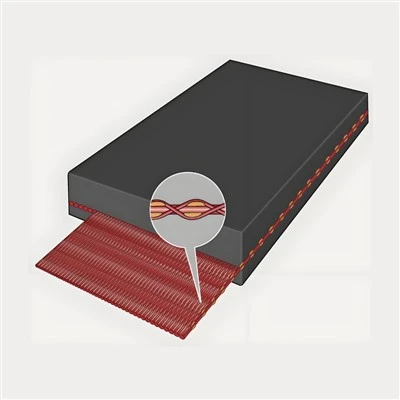
First and foremost, the biggest advantage of a sidewall belt is its ability to move bulk materials on steep inclines—even near-vertical slopes—that would cause a flat belt to spill almost everything it carries. Let’s be honest: flat conveyor belts work well when they’re moving material at low angles, usually under 18 degrees, but if you try to push that to 30, 40, or even 90 degrees, the force of gravity will pull rock, grain, wood chips, or other loose materials right off the surface. A sidewall belt solves that problem by adding vertical rubber cleats, called flights, that run along the entire length of the belt, connected to the sidewall edges. These cleats cradle the material, holding it securely in place as the belt tilts upward. I had a client a few years back in the aggregate mining industry who was using three sets of flat belts moving rock up a 25-degree slope, with constant spillage that required two full-time workers to clean up the area every shift. We replaced one of those lines with a sidewall belt, and right away they cut spillage by over 90%. They didn’t just save on cleanup labor—they also eliminated the lost rock that was slipping off, which added up to thousands of dollars a month in recovered material that would’ve otherwise gone to waste.
That ability to handle steep slopes also translates directly to smaller footprints on the plant or job site. Traditional conveyor systems for incline movement often require long, winding pathways that stretch across yards and through buildings, because you have to build enough length to keep the slope gentle enough for flat belts. A sidewall belt can do the same job in a fraction of that space, which is a huge win for facilities where space is tight. I work with a lot of small grain elevators that don’t have room to expand their conveyor lines. Before they started using sidewall belts, they had to route their grain conveyors around existing silos and processing equipment, which added extra length and more equipment that could break down. Now they can run a single sidewall belt up a steep, straight path that fits right into their existing layout, cutting down on the number of belts, pulleys, and motors they need. Less equipment means less maintenance, fewer parts to stock, and less downtime when something needs repair.
Another key advantage is the versatility sidewall belts offer for different materials and application types. Not all sidewall belts are the same, which is one of the things I love about working with them—they can be customized to fit almost any job. For example, if you’re handling fine, powdery material like cement dust or flour, you can add a chevron pattern to the base of the belt between the sidewalls and cleats. That chevron texture creates extra friction so even the smallest particles don’t slide down the slope. If you’re moving heavy, sharp material like crushed stone or scrap metal, you can use a reinforced rubber compound for the sidewalls and cleats that’s more resistant to abrasion and punctures, so it doesn’t tear as easily when the material rubs against it. We’ve even supplied sidewall belts for jobs that move hot materials, like foundry sand that’s still 200 degrees Fahrenheit, using heat-resistant rubber compounds that hold up to the high temperatures without breaking down. This flexibility is a big deal because one-size-fits-all conveyor belts almost always end up being a bad fit for some part of the operation.
Speaking of durability, sidewall belts actually have a longer service life than many people expect, when they’re specified correctly for the job. A common misconception is that the raised edges and cleats make the belt weaker, but that’s not true when you work with a reputable supplier. The sidewalls are bonded to the main belt carcass using vulcanization, which is a process that fuses the rubber layers together at a molecular level instead of just gluing them on. Vulcanized bonds are far stronger and more resistant to peeling or separating, even when the belt is flexed around pulleys or operated at high tension. I’ve seen cheaply made sidewall belts from other suppliers that started splitting at the sidewalls within six months, but the ones we supply often last five to seven years, even in demanding environments. Part of that is because we work with our customers to pick the right rubber compound and cleat height for their material, so the belt isn’t overworked or underbuilt for the task at hand. That means less frequent replacement, less downtime, and lower long-term costs.
Safety is another big advantage that doesn’t get talked about enough, but it’s a huge factor for facilities with high turnover or tight regulatory requirements. Spillage from flat conveyor belts is a major safety hazard. Loose material on the floor can cause employees to slip and fall, especially in areas that are hard to clean completely. It can also get kicked up into the air, creating dust that’s not just a breathing hazard but also a fire or explosion risk for materials like grain or sugar. Sidewall belts cut down on that spillage dramatically, so the work area stays cleaner and safer for the people operating the equipment. I had a client in the food processing industry a couple of years back that was dealing with OSHA inspections citing spillage-related hazards. They switched to sidewall belts for their grain and flour lines, and within six months, they’d eliminated all of those cited violations, which saved them from significant fines and improved their working conditions for their staff. Plus, because sidewall belts reduce the number of conveyors needed, there are fewer moving parts around the plant that employees can accidentally get caught in.
Efficiency is where the real cost savings add up over time, though. Let’s go back to that mining client I mentioned earlier. They not only cut spillage but also reduced their energy use, because a single sidewall belt moving material up a steep slope uses less power than three separate flat belts doing the same job. Each flat belt has its own motor, so running three motors uses more electricity than one. They also had fewer components to maintain, so they spent less on replacement parts and repair labor. Over three years, those savings added up to more than the cost of the belt itself, which is a return on investment that’s hard to ignore. That’s a common story across the industries I serve: whether it’s mining, agriculture, construction, food processing, or waste management, sidewall belts deliver better energy efficiency, lower maintenance costs, and higher overall throughput.
I should also mention that sidewall belts aren’t just for inclines—they’re versatile enough for horizontal applications too. If you’re moving material that’s prone to shifting or spilling during horizontal transport, the sidewalls act as a barrier, keeping the load contained even if the belt hits a sudden jolt or has to stop quickly. Some clients use sidewall belts for loading and unloading trucks or shipping containers, where the tight space means the belt has to be operated at high speeds and close to the edges of the container. The sidewalls prevent material from spilling over the side of the belt and into the truck or container’s gaps, which makes loading and unloading faster and reduces material loss.
Of course, like any piece of equipment, sidewall belts work best when they’re specified and installed correctly. That’s why working with a supplier that knows their stuff is so important. Some suppliers will just sell you a standard sidewall belt without considering your specific material, slope angle, or operating environment, which can lead to problems like cleats wearing out too fast or the belt not holding material properly. When you work with someone like me, I’ll ask you questions about what material you’re moving, how steep your slope is, how fast the belt runs, and what kind of operating conditions you’re in (like heat, cold, or abrasive materials) before I recommend a belt. I also provide guidance on installation, because even the best belt will fail prematurely if it’s installed incorrectly. We offer vulcanization services for on-site repairs too, so if something does go wrong, we can fix it quickly without having to remove the entire belt from the system.
At the end of the day, the question isn’t whether a sidewall rubber conveyor belt is better than a flat belt—it’s whether it’s better for your operation. If you’re moving bulk material on slopes, dealing with tight space, dealing with spillage-related safety issues, or looking to lower long-term operating costs, a sidewall belt is almost always the right choice. I’ve seen too many clients waste thousands of dollars over years using flat belts for jobs they weren’t designed for, when a simple switch to a sidewall belt would have solved their problems.
If you’re currently dealing with spillage, high maintenance costs, or space constraints in your material handling system, I’d be happy to walk through your needs and help you figure out if a sidewall rubber conveyor belt is the right solution for you. We work with operations of all sizes, from small local farms to large national mining companies, and we tailor every belt to fit your specific job. There’s no one-size-fits-all answer, but a conversation about your challenges will help us find the best option for your material handling needs.
Sidewall Conveyor Belt References
Bulk Material Handling Equipment Association. (2021). Conveyor Belt Design and Application Guide. Industrial Press.
Rubber Manufacturers Association. (2022). Specifications for Industrial Conveyor Belts. RMA Technical Bulletin.
Occupational Safety and Health Administration. (2020). Guidelines for Controlling Conveyor Belt Spillage and Workplace Hazards. OSHA Publication 3551-18R.
Alumina Technology (Qingdao) New Materials Co., Ltd.
As one of the most professional rubber conveyor belt manufacturers and suppliers in China, we also support customized service. With abundant experience, we warmly welcome you to buy rubber conveyor belt for sale here and get quotation from our factory. For price consultation, contact us.
Address: No.448, Jiangshan South Road, Huangdao District, Qingdao City, Shandong Province
E-mail: Gloria.zhang@contitech.cn
WebSite: https://www.altechconveyorbelt.com/
