If you’ve ever watched a surgical procedure—whether from the operating room floor, a training video, or even a dramatized show—you might’ve noticed a dozen small tools flitting between the surgeon’s hands, the instrument nurse’s tray, and the patient’s body. One tool that never gets the Hollywood spotlight, but is absolutely non-negotiable for closing incisions, tying deep sutures, and securing delicate tissues is the needle holder. As a surgical instruments supplier who’s spent 15+ years working with hospitals, trauma centers, and ambulatory surgery centers, I’ve seen firsthand how a high-quality needle holder can make the difference between a smooth, efficient procedure and one that drags on, risking patient safety and surgeon burnout. Let’s break down what a needle holder does, why it matters more than you might think, and how our team designs these tools to meet the exact needs of the surgeons who rely on them. Surgical Instruments

First, let’s start with the basics: what a needle holder is, at its core. It’s not just a fancy pair of pliers. It’s a precision instrument with two hinged jaws, a handle, and a locking mechanism, engineered specifically to grasp a surgical needle securely and consistently without damaging the needle’s sharp point or the delicate suture thread tied to its eye. Most people outside the surgical field might wonder why you can’t just use a pair of forceps to hold a needle. The answer comes down to control, precision, and ergonomics. Forceps are designed to grasp tissue or small objects, but they lack the jaw geometry, serration pattern, and balance needed to manipulate a needle through layers of tissue—especially deep, hard-to-reach areas or tight, sensitive spaces like the eye or vascular system.
Let’s get into the key functions of a needle holder, because that’s where its true value shines. First and foremost is secure, atraumatic needle grasping. Atraumatic means “not causing trauma” or damage. When a surgeon is suturing, the needle has to pass through multiple tissue layers, from the superficial skin to deep fascia or organ tissue. If the needle holder crushes the needle’s eye or bends the shaft mid-procedure, the surgeon has to stop, grab a new needle, and reposition, which adds time to the operation. Worse, a damaged needle can snap mid-suture, leaving a small metal fragment in the patient’s body— a tiny but critical risk that every surgical team works to avoid. That’s why we test every needle holder we distribute to ensure its jaws create a uniform, gentle grip: serrated inner surfaces that match the curvature of standard curved or straight surgical needles, without excessive pressure that warps or dents the needle.
Second, needle holders enable consistent suture tying. Tying surgical knots is a skill that takes years to master, and the needle holder is the primary tool surgeons use to manipulate the suture thread into tight, secure knots that won’t slip. The right holder has a balanced weight and a locking mechanism that lets surgeons hold tension in the suture while they adjust the knot, no re-grasping needed. For example, in a colon resection, where the surgeon is closing a 12-inch incision through dense abdominal wall tissue, they might need to tie 20+ knots. A flimsy, unbalanced needle holder will make each tie feel like a struggle, leading to uneven knots that can break or cause wound dehiscence (the incision splitting open) weeks later. On the other hand, a quality holder lets the surgeon work smoothly, reducing hand fatigue and ensuring every knot is uniform and secure.
Third, needle holders adapt to every type of surgical setting and specialty. Not all operations are the same, so needle holders aren’t one-size-fits-all. For microsurgery—like repairing a cut tendon or reattaching a small blood vessel in the hand—surgeons use micro needle holders, which are tiny, with jaws less than half an inch long, designed to grasp 10-0 or 11-0 sutures that are thinner than human hair. For general surgery, a longer, heavier needle holder is better for deep incisions where the surgeon’s hand can’t reach the suture site directly. For obstetric and gynecologic procedures, curved needle holders fit naturally around the pelvic area, making it easier to close episiotomies or uterine incisions. Even orthopedic surgery has specialized needle holders that are longer and sturdier to handle the thick, non-absorbable sutures used to repair tendons and ligaments. I’ve seen our customers order specific models for pediatric surgery, too—smaller, lighter holders that are gentle enough to suture a newborn’s tiny incision without damaging surrounding tissue.
Now, let’s talk about why a supplier’s expertise matters here. Too many surgical instruments are made to be interchangeable, but that’s a mistake. Surgeons don’t just need a tool that “works”—they need a tool that’s built for their specific hand size, their specialty, and the procedures they do every day. A few years ago, we worked with a group of trauma surgeons at a Level 1 trauma center who were complaining about their needle holders slipping mid-procedure during emergency cases. They were treating patients with multiple lacerations, often using heavy-duty sutures that required more grip pressure. The generic holders they were using had a coarse serration pattern that bit too hard into the suture thread, causing fraying, or too little grip, leading to the needle sliding. Our team worked with them to design a custom set of holders with a medium-fine serration pattern, a contoured handle that fit their hands during 12-hour shifts, and a secure locking mechanism that engaged with one hand instead of two. After 6 months of testing, they reported a 30% reduction in needle and suture-related delays during emergency surgeries—something that directly improved patient outcomes. That’s the kind of impact a good needle holder has, and it’s why our company focuses on collaborating with surgeons instead of just selling them products off a catalog.
Another point that people don’t often discuss: needle holders play a role in infection control. Surgical instruments have to be sterilized between uses, and repeated autoclaving (high-temperature, high-pressure steam sterilization) can wear down the serrations on a needle holder’s jaws over time. If the serrations are worn, the grip becomes inconsistent, which as we already discussed, leads to delays and increased risk. But more than that, poorly maintained holders can trap tiny bits of tissue or suture thread in the gaps between the jaws, creating a potential breeding ground for bacteria. That’s why we design our needle holders with smooth, easy-to-clean surfaces and rust-resistant stainless steel that holds up to hundreds of sterilization cycles without losing its shape. We also provide guidelines for proper care, like wiping the jaws with a soft cloth after each use and lubricating the hinge periodically, to help our customers extend the life of their tools and keep ORs safe.
I’ve also seen the difference between a cheap needle holder and a high-quality one, firsthand. Early in my career, I worked at a small hospital where we had a box of discounted needle holders from a non-specialized supplier. One day, during a surgery to close a small incision on a patient’s arm, the jaw of the needle holder cracked mid-procedure. The surgeon had to stop, ask for a new tool, and the patient had to stay an extra hour in the operating room because of the delay. That incident stuck with me. It’s not just about the cost of the tool—it’s about the ripple effect on the patient, the surgeon, and the entire surgical team. A $200 needle holder from a specialized supplier might cost more upfront, but it’s an investment in patient safety, efficiency, and the well-being of the people who work in the OR 5 days a week.
Today, as a surgical instruments supplier, my team and I get to work with hospitals across the country to stock their ORs with needle holders that fit their specific needs. Whether it’s a small ambulatory surgery center that performs mostly minor procedures and needs lightweight, easy-to-maneuver holders, or a large academic medical center that needs a full range of specialty holders for microsurgery, trauma, and orthopedics, we make sure each tool meets strict standards for precision, durability, and ergonomics. We also offer training for surgical nurses and residents on how to use and care for needle holders properly, because even the best tool won’t perform well if it’s used incorrectly.
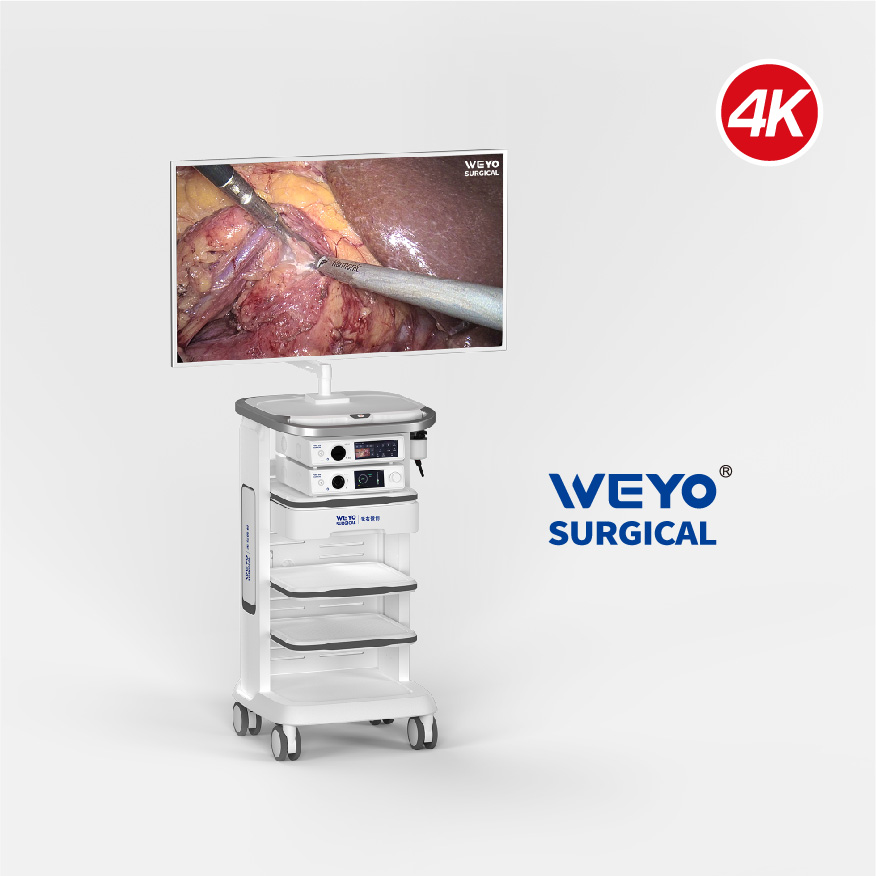
If you’re a surgeon, OR manager, or procurement specialist looking to upgrade your surgical instruments, don’t overlook the humble needle holder. It’s a tool that’s used in almost every surgical procedure, yet its impact on patient outcomes and OR efficiency is often underestimated. Instead of settling for generic, one-size-fits-all holders, consider working with a supplier that listens to your needs, understands the science of surgical tools, and provides products that are built to last. Our team is here to answer any questions you have about our needle holders, help you select the right models for your practice, and provide ongoing support to make sure your OR runs as smoothly as possible. We believe that every tool in the operating room should be designed with one thing in mind: the patient. If you’re ready to discuss your requirements, reach out to us to set up a time to chat. We’re here to help.
Surgical Power Systems References
- Townsend, C. M., Beauchamp, R. D., Evers, B. M., & Mattox, K. L. (Eds.). (2021). Sabiston Textbook of Surgery (21st ed.). Elsevier.
- Schwartz, S. I., Shires, G. T., & Matsumoto, T. (Eds.). (2016). Schwartz’s Principles of Surgery (11th ed.). McGraw-Hill.
- Association of periOperative Registered Nurses (AORN). (2022). Guidelines for Perioperative Practice. AORN.
- Rothrock, J. C. (Ed.). (2019). Alexander’s Care of the Patient in Surgery (16th ed.). Elsevier.
Jiangsu Bonss Medical Technology Co., Ltd.
As one of the most professional surgical instruments manufacturers and suppliers in China, we’re featured by quality products and good price. Please rest assured to buy bulk surgical instruments for sale here from our factory. Customized orders are welcome.
Address: Building #7,No.898,China Medical City Avenue, Haling District, Taizhou City.Jiangsu P.R. China
E-mail: inquiry@plasma-surgical.com
WebSite: https://www.bonssmedical.com/
