Hey there! As a supplier of Polyester Polyol EG Series, I often get asked about how different factors affect the reaction between our products and isocyanates. One key aspect that comes up a lot is the catalyst dosage. So, let’s dive into how the catalyst dosage impacts this reaction. Polyester Polyol EG Series
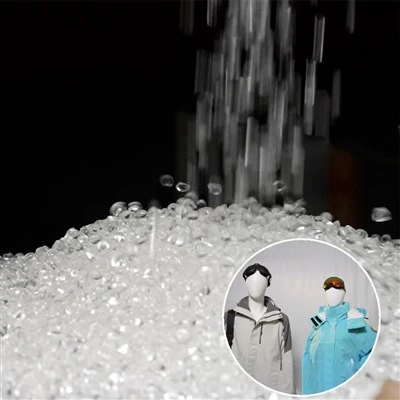
First off, let’s quickly break down what Polyester Polyol EG Series and isocyanates are. Polyester Polyol EG Series is a group of polyols that we supply. They’re widely used in making things like polyurethanes, which can be found in foams, coatings, adhesives, and a whole bunch of other products. Isocyanates, on the other hand, are the reactants that combine with polyols to form these polyurethanes.
Now, catalysts play a super important role in this reaction. They speed up the chemical reaction between the Polyester Polyol EG Series and isocyanates. Without a catalyst, the reaction would be really slow, and in some cases, it might not even happen at all under normal conditions.
When it comes to the catalyst dosage, it’s all about finding that sweet spot. If you use too little catalyst, the reaction between the Polyester Polyol EG Series and isocyanates will be sluggish. It could take a long time for the polyurethane to form, and the final product might not have the properties you’re looking for. For example, in a foam application, the foam might not rise properly, or it could have a weak structure.
Let’s say you’re making a polyurethane foam cushion. With a low catalyst dosage, the reaction takes ages. The blowing agents that are supposed to create the foam cells don’t work as efficiently because the reaction isn’t happening fast enough. As a result, the cushion might end up being too dense or have uneven cell distribution. This means it won’t be as comfortable as it should be, and it might not last as long either.
On the flip side, using too much catalyst can be just as bad, if not worse. When you overdose on the catalyst, the reaction between the Polyester Polyol EG Series and isocyanates becomes super fast. It can happen so quickly that it’s hard to control. This can lead to a bunch of issues.
One big problem is that the reaction can generate a lot of heat. In a high – catalyst – dosage situation, the heat build – up can be so rapid that it causes the polyurethane to overheat. This can lead to degradation of the polymer, which means the final product will have poor mechanical properties. For instance, in a coating application, an over – catalyzed reaction might result in a coating that’s brittle, has poor adhesion to the substrate, and is more prone to cracking.
Another issue with excessive catalyst dosage is that it can cause the reaction to go too far in some areas and not enough in others. This leads to an inconsistent product. In an adhesive, for example, you might find that some parts of the bond are really strong, while others are weak. This makes the adhesive unreliable and not suitable for its intended use.
So, how do you figure out the right catalyst dosage? Well, it depends on a few things. The type of Polyester Polyol EG Series you’re using is important. Different grades in our series have different chemical structures and reactivities. Some might require more catalyst to react with isocyanates at an appropriate rate, while others might need less.
The type of isocyanate also matters. There are different kinds of isocyanates, like TDI (toluene diisocyanate) and MDI (methylene diphenyl diisocyanate), and they react differently with the Polyester Polyol EG Series. You need to take this into account when determining the catalyst dosage.
The application you’re using the polyurethane for is another crucial factor. If you’re making a fast – setting adhesive, you might need a slightly higher catalyst dosage to speed up the reaction. But if you’re doing a large – scale foam production, you need to balance the reaction rate to ensure a uniform and high – quality foam.
In many cases, it’s a process of trial and error. We often work closely with our customers to help them find the right catalyst dosage. We provide samples of our Polyester Polyol EG Series and offer guidance on how to start experimenting with different catalyst amounts.
Once customers start their tests, they’ll typically look at a few key things to evaluate the result. They’ll check the reaction time, which is how long it takes for the Polyester Polyol EG Series and isocyanates to fully react. They’ll also examine the physical properties of the final polyurethane product, like its hardness, flexibility, and strength. If the product meets the requirements for the intended application, then the catalyst dosage is probably just right.
As a Polyester Polyol EG Series supplier, we understand that getting the catalyst dosage right is a big deal for our customers. We’re always here to support them. We offer technical advice, and we’re constantly researching and developing new products to make the reaction between our polyols and isocyanates more predictable and controllable.
If you’re in the business of using polyurethanes and are interested in our Polyester Polyol EG Series, we’d love to talk to you. We can help you figure out the best catalyst dosage for your specific application. Whether you’re making foams, coatings, adhesives, or anything else, we’re confident that our products and our expertise can meet your needs.
If you have any questions about the catalyst dosage or want to learn more about our Polyester Polyol EG Series, don’t hesitate to reach out to us. We’re here to assist you in getting the most out of our products and achieving the best results in your production process.

So, if you’re looking for a reliable Polyester Polyol EG Series supplier who can help you navigate the complex world of catalyst dosage and polyurethane reactions, give us a shout. Let’s have a conversation and see how we can work together to make your products even better.
TPU References:
- "Polyurethane Handbook" by G. Oertel.
- Various industry research papers on polyol – isocyanate reactions.
Singbon New Materials(Shandong) Co., Ltd.
With abundant experience, we are one of the most reliable polyester polyol eg manufacturers and suppliers in China. We warmly welcome you to wholesale advanced polyester polyol eg at low price from our factory. If you have any enquiry about quotation and free sample, please feel free to email us.
Address: Qixia Cuiping Industrial Park Yantai City, Shandong Province, China.
E-mail: DBG1@singbonpu.com
WebSite: https://www.tpusingbon.com/
