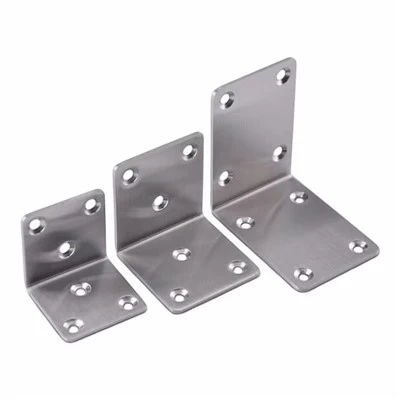
Hey there! As a supplier of metal plates, I often get asked about what the formability of metal plates actually is. So, I thought I’d take a few minutes to break it down for you in a way that’s easy to understand. Metal Plates
What is Formability?
Formability, in simple terms, is how easily a metal plate can be shaped into different forms without cracking, tearing, or losing its integrity. It’s like how dough can be rolled, cut, and molded into various shapes when you’re baking. For metal plates, this ability to be formed is super important because it determines how versatile the metal can be in different applications.
Let me give you an example. Say you’re making a car body. You need metal plates that can be bent into curves, stamped into specific shapes, and stretched to fit different parts of the car. If the metal doesn’t have good formability, it’ll crack during the manufacturing process, which is a huge no – no.
Factors Affecting Formability
There are several factors that can affect the formability of metal plates.
1. Material Composition
The type of metal and its alloying elements play a big role. For instance, aluminum is known for its excellent formability. It’s lightweight and can be easily shaped, which is why it’s widely used in the aerospace and automotive industries. On the other hand, some high – strength steels can be a bit more challenging to form because they’re designed to be tough and rigid. The alloying elements in these steels, like manganese, chromium, and nickel, can change the metal’s crystal structure and make it less malleable.
2. Grain Size
The size of the metal’s grains also matters. Smaller grain sizes generally lead to better formability. When the grains are small, the metal can deform more uniformly. Think of it like a bunch of small building blocks. They can move and rearrange more easily compared to a few large blocks. During the manufacturing process, we can control the grain size through processes like heat treatment and cold rolling.
3. Temperature
Temperature has a significant impact on formability. Most metals become more formable when they’re heated. This is because heat increases the mobility of atoms within the metal, making it easier to reshape. For example, in hot forging, the metal is heated to a high temperature before it’s shaped. However, heating also has its limitations. If the temperature is too high, the metal can start to oxidize or lose its strength.
4. Strain Rate
The speed at which the metal is deformed, known as the strain rate, can affect formability too. Some metals perform better at slow strain rates, while others can handle high – speed deformation well. In stamping operations, for example, the strain rate can vary depending on the equipment used. If the strain rate is too high for a metal with poor high – speed formability, it can lead to cracking.
Measuring Formability
There are a few ways to measure the formability of metal plates.
1. Tensile Testing
Tensile testing is one of the most common methods. In a tensile test, a small sample of the metal plate is pulled until it breaks. During this process, we measure the amount of stress and strain the metal can withstand. The elongation at break and the reduction in area are important indicators of formability. A metal that can stretch a lot before breaking has better formability.
2. Erichsen Test
The Erichsen test is another popular method, especially for sheet metals. In this test, a spherical punch is pressed into the metal sheet until a crack appears. The depth of the punch at the point of cracking is measured. A greater depth indicates better formability.
Why Formability Matters for You
As a customer, understanding the formability of metal plates is crucial. If you’re in the manufacturing business, you want metal plates that can be easily formed into the products you’re making. This not only saves time but also reduces costs. You won’t have to deal with a lot of scrap material due to cracking or other forming issues.
For example, if you’re making furniture, you might need metal plates that can be bent into different shapes to create unique designs. Or if you’re in the electronics industry, you may need thin metal sheets that can be stamped into precise components.
Our Metal Plates and Formability
At our place, we take formability seriously. We offer a wide range of metal plates with different formability characteristics to meet your specific needs. Whether you’re looking for highly formable aluminum plates for intricate designs or high – strength steel plates that can withstand heavy – duty forming processes, we’ve got you covered.
We work closely with our customers to understand their requirements and recommend the best metal plates for their applications. Our team of experts can also provide guidance on the forming processes to ensure you get the best results.
How to Choose the Right Metal Plates for Formability
When choosing metal plates for your project, here are a few things to keep in mind.
1. Know Your Application
First, understand what you’re going to use the metal plates for. If it’s for a simple bending operation, you might not need a metal with extremely high formability. But if you’re doing complex stamping or deep drawing, you’ll want a metal that can handle those processes without issues.
2. Consider the Cost
Formability often comes at a cost. Metals with excellent formability, like some high – end aluminum alloys, can be more expensive. You need to balance the formability requirements with your budget. Sometimes, a slightly lower – formability metal that still meets your basic needs can be a more cost – effective option.
3. Ask for Samples
Don’t be afraid to ask for samples. This allows you to test the formability of the metal plates in your own manufacturing environment. You can see how they perform under your specific forming conditions and make a more informed decision.
Conclusion
So, in a nutshell, formability is all about how easily metal plates can be shaped. It’s influenced by factors like material composition, grain size, temperature, and strain rate. Measuring formability helps us understand how well a metal will perform in different forming processes.
Metal Plates If you’re in the market for metal plates and need help with formability, don’t hesitate to reach out. We’re here to assist you in finding the right metal plates for your project and making the manufacturing process as smooth as possible. Whether you’re a small – scale manufacturer or a large – industrial player, we’re committed to providing you with high – quality metal plates and excellent service. Let’s start a conversation about your metal plate needs and see how we can work together to achieve your goals.
References
- "Metals Handbook: Forming and Forging" by ASM International
- "Manufacturing Engineering & Technology" by Serope Kalpakjian and Steven Schmid
- "Sheet Metal Forming: Principles and Applications" by R. H. Wagoner and N. R. Hortop
Qingdao Xinding Huiyuan Industry and Trade Co., Ltd.
We are one of the most experienced metal plates manufacturers and suppliers in China. With a professional production team, we are able to meet the needs of the majority of our customers. Please rest assured to wholesale customized metal plates at competitive price from our factory.
Address: No.149, Yuyuan Street, Chenggang Road, Laizhou City, Yantai City, Shandong Province
E-mail: lin@lzhdwj.cn
WebSite: https://www.hdmetalparts.com/
